Matcha starts as tencha, a leaf tea made only for grinding. The steps below describe the traditional Japanese method in general, not any specific product.
1. Shade
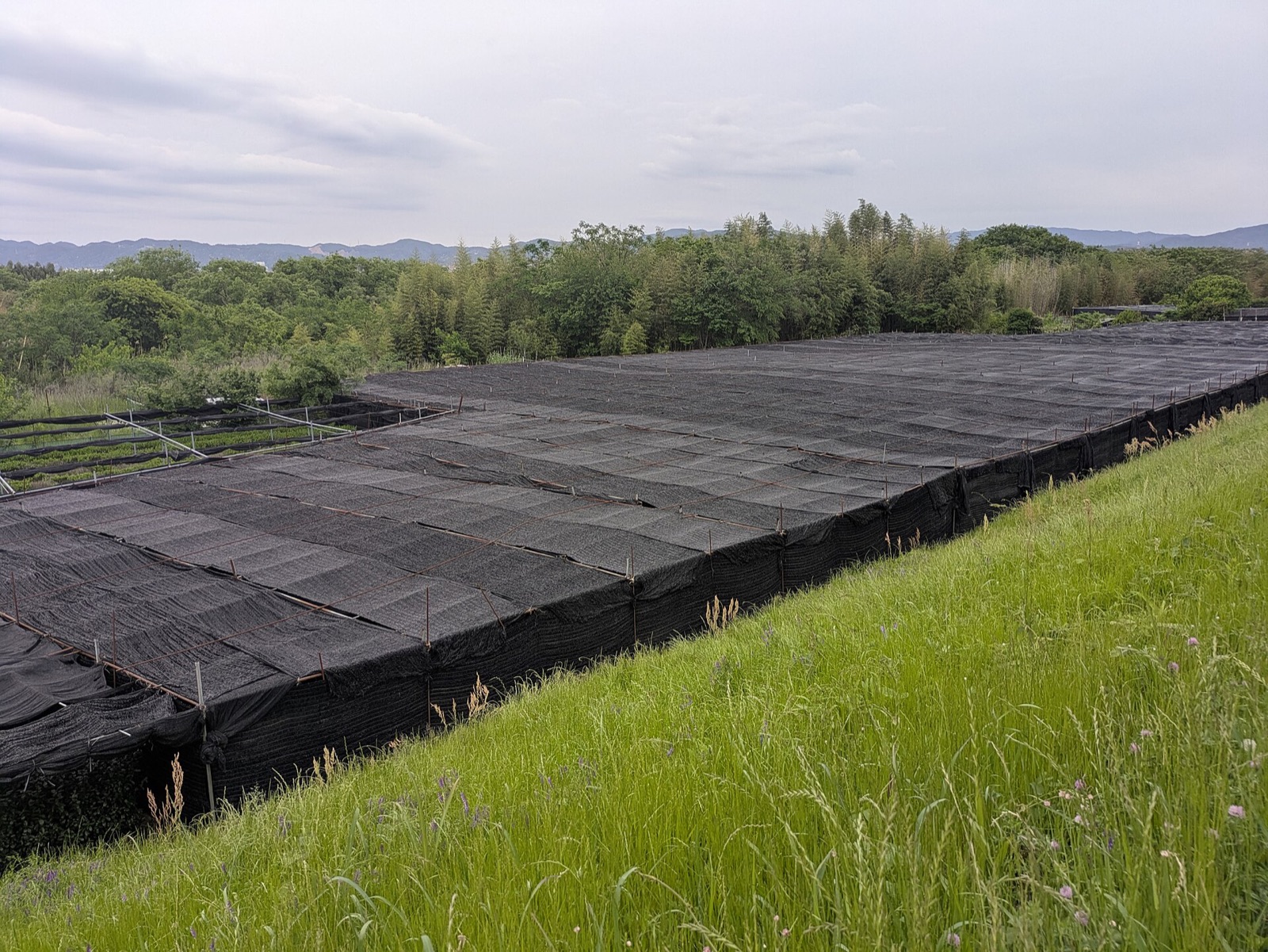
Under the Japanese standard, tencha comes from fields covered for two to three weeks before picking, using reed screens, straw or synthetic shade cloth. Japanese growers developed this shade cultivation in the late 16th century. Shading raises chlorophyll and preserves amino acids, which gives matcha its deep green color and umami.
2. Pick and steam
Spring leaves are picked and steamed for about 15 seconds to stop oxidation, then spread and cooled.
3. Dry without rolling
Green teas such as sencha are rolled. Tencha is not. It dries flat in a dedicated tencha oven, typically a multi-level conveyor.
4. Remove stems and veins
Stems and veins are separated from the dried leaf, leaving the tender leaf material for milling.
5. Mill
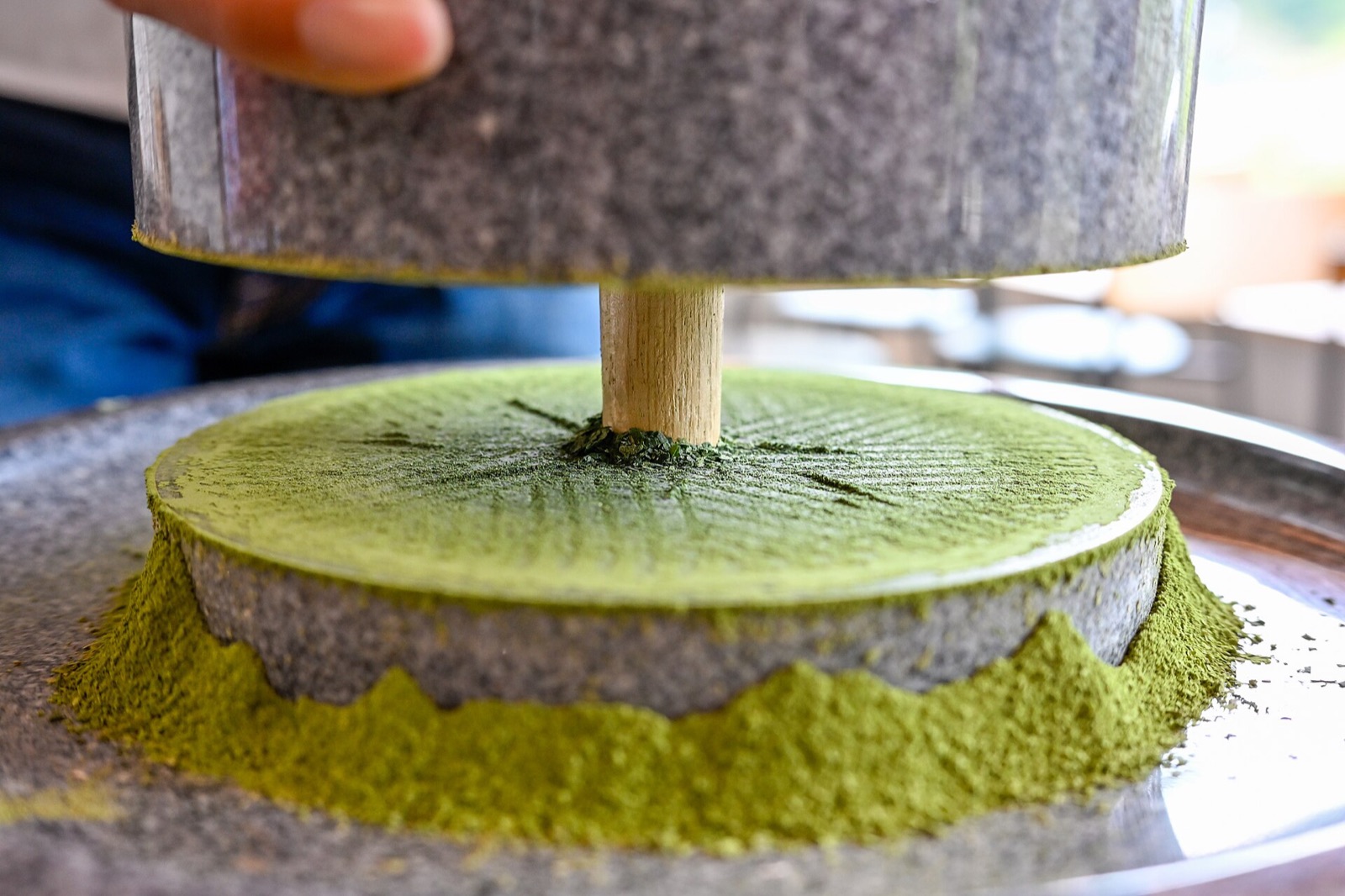
A traditional stone mill turns at about 53 to 54 revolutions per minute and produces only about 40 grams per hour. Friction warms the tea to around 50°C, which helps develop matcha’s aroma. The Japanese standard also allows equivalent mills, so the grinding method is a fair question to ask any supplier.
Sources
Taste it in your own drinks
Request a sample, or ask about pricing and pack sizes.